Alleged Breach of KBank Vietnam Exposes 10.1 Million Credit Registration Records With National IDs, Salaries, Credit Scores, and Employer Details
Quick Facts
Incident Overview
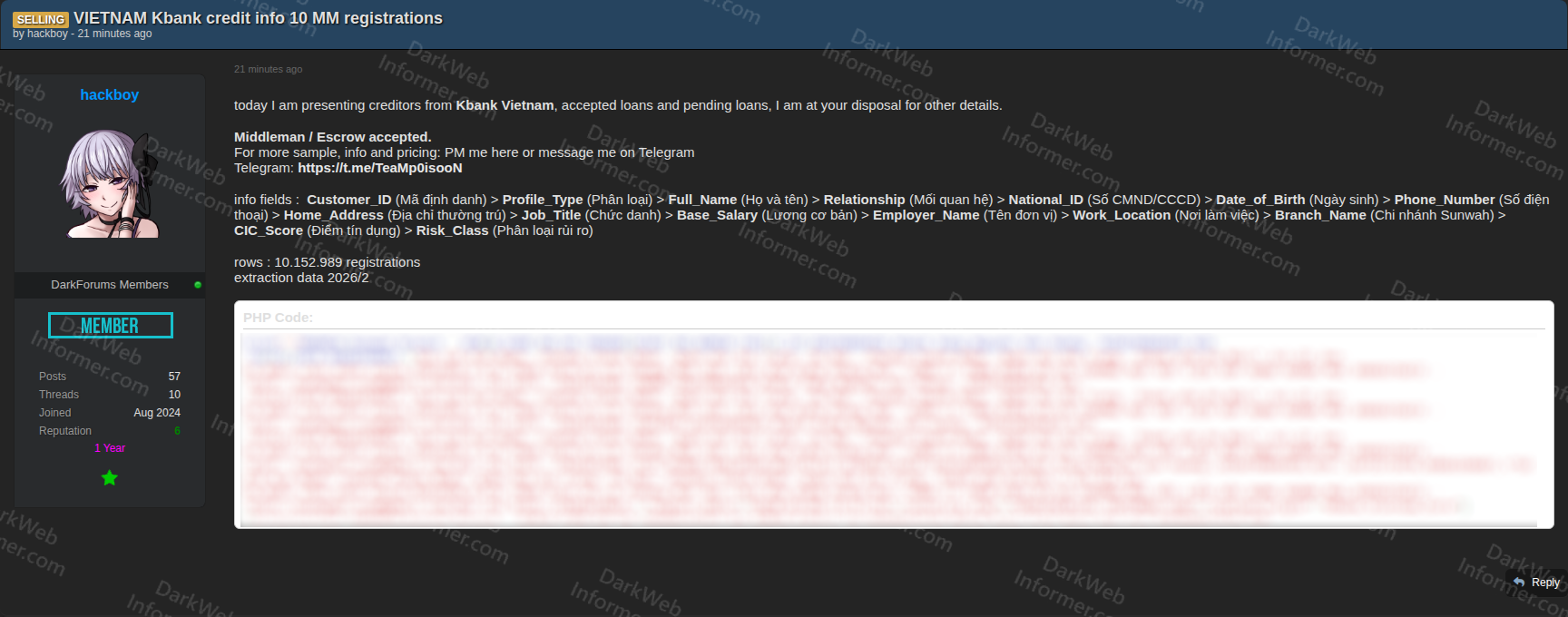
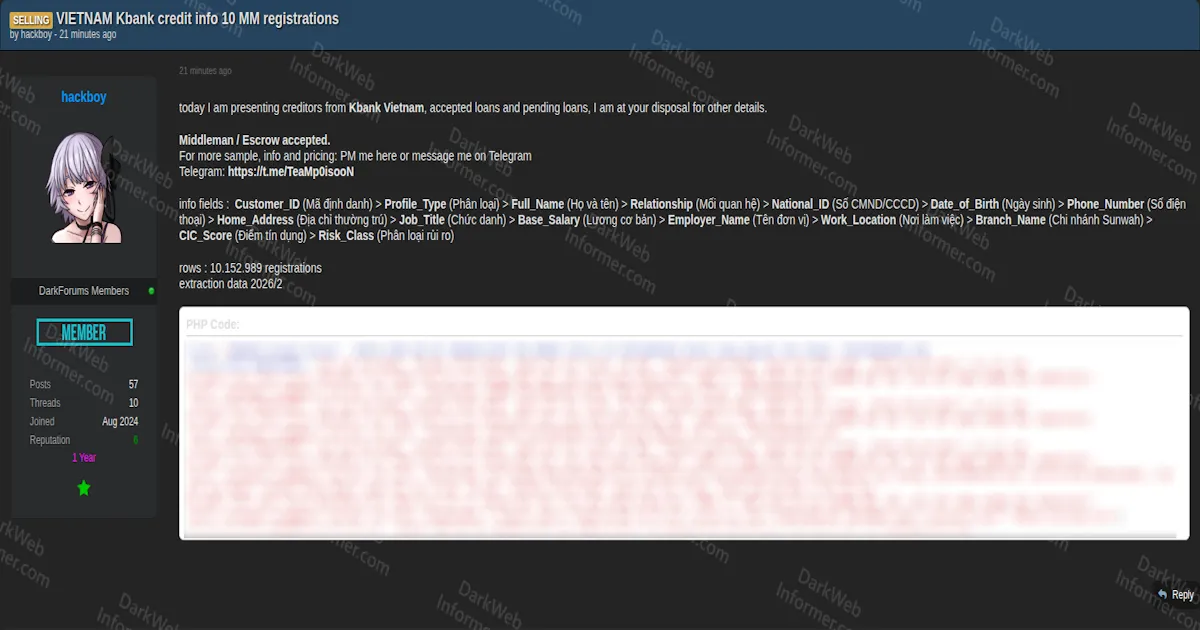
A threat actor going by hackboy claims to be selling credit registration data from KBank Vietnam (Kasikornbank's Vietnamese operations), including both accepted and pending loan applications. The dataset allegedly contains 10,152,989 records extracted in February 2026 from the Kbank_Vietnam_Core system. This is a major banking data breach that exposes the full financial profile of millions of Vietnamese loan applicants.
The sample data and field listing reveal an exceptionally detailed per-record structure. Each registration includes:
- Identity Data: Customer IDs, full names (Vietnamese), national ID numbers (CMND/CCCD, Vietnam's citizen identification), dates of birth, and phone numbers.
- Residential Data: Full home addresses including ward, district, and city details.
- Employment and Income: Job titles, base salaries, employer names, and work locations. The sample data shows specific company names, salary figures, and position titles for each applicant.
- Credit Data: CIC credit scores (Vietnam's Credit Information Center scores used by all Vietnamese banks for lending decisions), risk classifications (the sample shows "Watchlist_B" categorization), and branch names (Sunwah Branch HCM in the sample).
- Relationship Data: A relationship field is included in each record, suggesting the database captures family or guarantor connections between applicants.
- Profile Classification: Profile type fields categorize each record's loan application status.
- System Metadata: Export dates (the sample shows April 6, 2026 at 13:17:51), security tags marked "CONFIDENTIAL-INTERNAL-USE", and system origin tagged as "Kbank_Vietnam_Core".
The combination of national ID numbers, salaries, employer details, credit scores, and risk classifications makes this one of the most complete financial identity datasets to appear in a breach listing. For affected individuals, this data is sufficient for loan fraud, identity theft, social engineering against their employers, and targeted financial scams. The CIC credit scores are particularly sensitive because they are used across Vietnam's entire banking system for credit decisions.
Compromised Data Categories
Image Preview